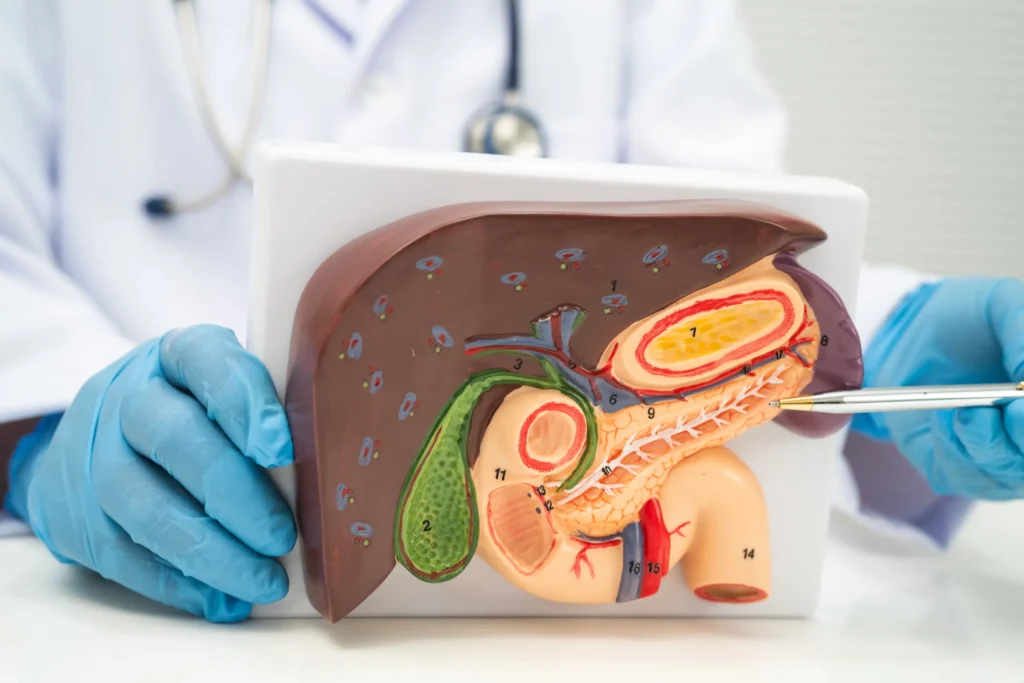
Gallbladder polyps are a common finding during an abdominal ultrasound examination and represent small projections of the gallbladder mucosa or wall into the gallbladder lumen. In most cases, they are benign lesions that do not cause health problems and are discovered incidentally during imaging performed for another reason.
However, proper evaluation of gallbladder polyps is important, as certain types, particularly larger polyps or those with specific characteristics, may be associated with an increased risk of malignant transformation.
Types of Gallbladder Polyps
The most common type of gallbladder polyps are cholesterol polyps, which are benign lesions caused by the accumulation of cholesterol deposits within the cells of the gallbladder mucosa. They are usually small, may be multiple, and have a very low risk of malignant transformation.
Other types include adenomyomatous lesions, which represent benign changes of the gallbladder wall, as well as adenomas, which are less common and may have precancerous potential in certain cases.
Possible Causes of Gallbladder Polyps
The exact cause of gallbladder polyp formation is not completely understood. In the case of cholesterol polyps, cholesterol accumulation within the gallbladder mucosa appears to play an important role.
Factors that have been associated with their development include:
- disorders of lipid metabolism,
- elevated cholesterol and triglyceride levels,
- obesity and metabolic syndrome,
- insulin resistance and diabetes mellitus,
- possible abnormalities in gallbladder motility and function.
Gallbladder polyps are not the same as gallstones. Gallstones form within the bile, whereas polyps are lesions that arise from the gallbladder wall and protrude into its lumen.
Symptoms
In most cases, gallbladder polyps do not cause symptoms and are discovered incidentally during an ultrasound examination.
When symptoms are present, they are usually not directly caused by the polyps themselves but may be related to other gallbladder conditions, such as gallstones or gallbladder dysfunction.
Possible symptoms include:
- pain or discomfort in the right upper abdomen,
- discomfort after fatty meals,
- nausea,
- indigestion or bloating.
The presence of severe abdominal pain, fever, or jaundice requires prompt medical evaluation.
Diagnosis and Monitoring
The main diagnostic method for gallbladder polyps is abdominal ultrasound, which can identify their size, number, and morphological characteristics.
The decision regarding surveillance or further management depends on:
- the size of the polyp,
- increase in size during follow-up examinations,
- morphological characteristics (e.g., broad-based attachment or associated gallbladder wall thickening),
- patient age,
- presence of additional risk factors.
Small polyps without suspicious features are usually monitored with follow-up ultrasound examinations at appropriate intervals, according to current clinical guidelines.
Treatment – When is Surgery Required?
In most cases, immediate treatment is not necessary. Management is based on an individualized assessment of the risk of malignancy.
Cholecystectomy (surgical removal of the gallbladder) may be recommended when there is an increased risk of malignant transformation, such as in cases of:
- large polyps (particularly ≥10 mm),
- increase in polyp size during follow-up,
- suspicious morphological features,
- coexistence of additional risk factors.
The procedure is usually performed laparoscopically and is considered a safe and effective treatment.
Conclusion
Most gallbladder polyps are benign and do not require treatment; however, they require appropriate evaluation and, when indicated, regular monitoring. Assessment of their size, morphology, and changes over time allows early identification of cases requiring more active management.
Regular follow-up and proper patient education are essential components for the safe management of gallbladder polyps.